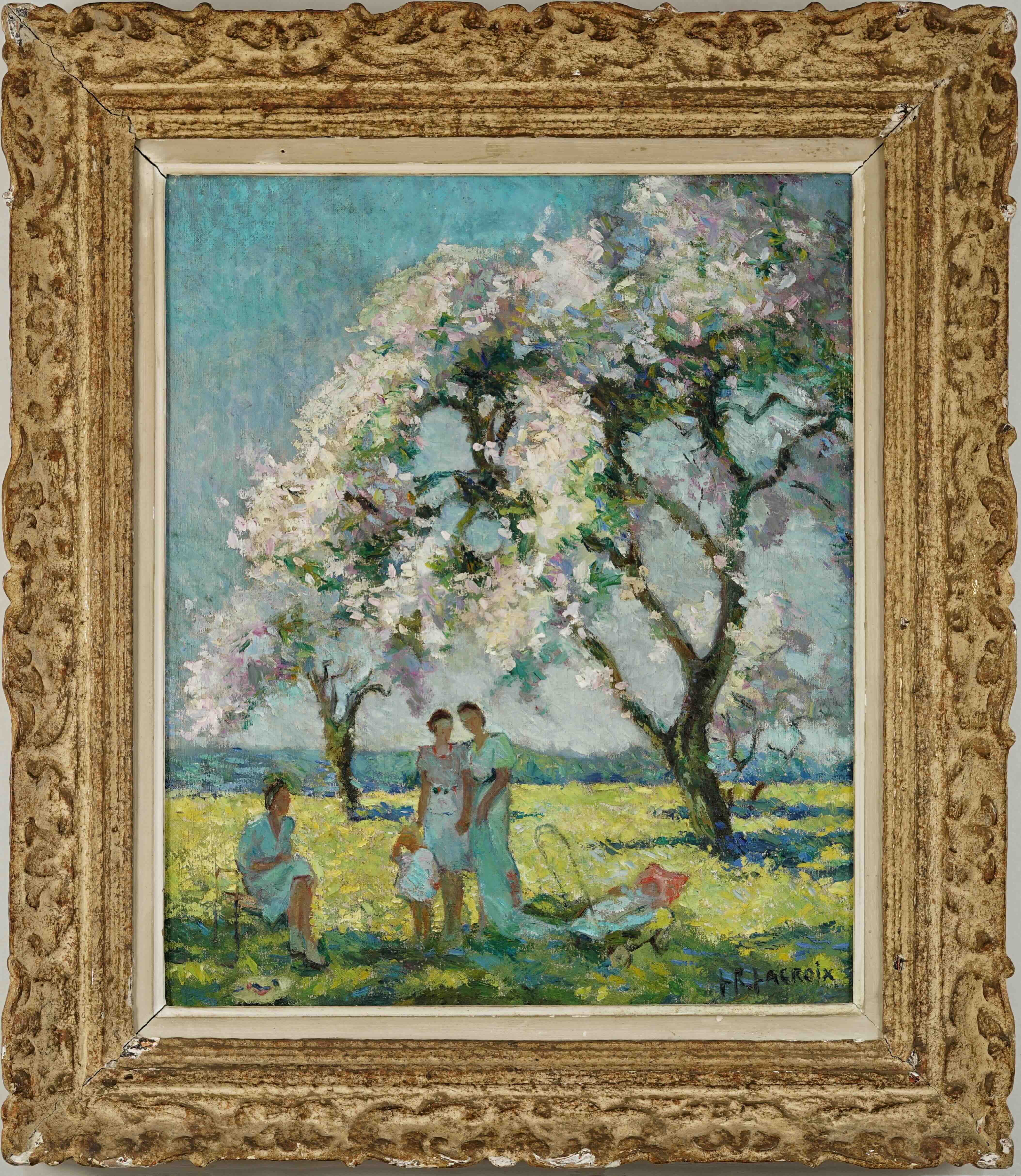
Medium: Oil on canvas
Dimensions: 65 x 54 cm
Signature: Signed lower right
Period of execution: c. 1890-1940
Price: ¥36,200
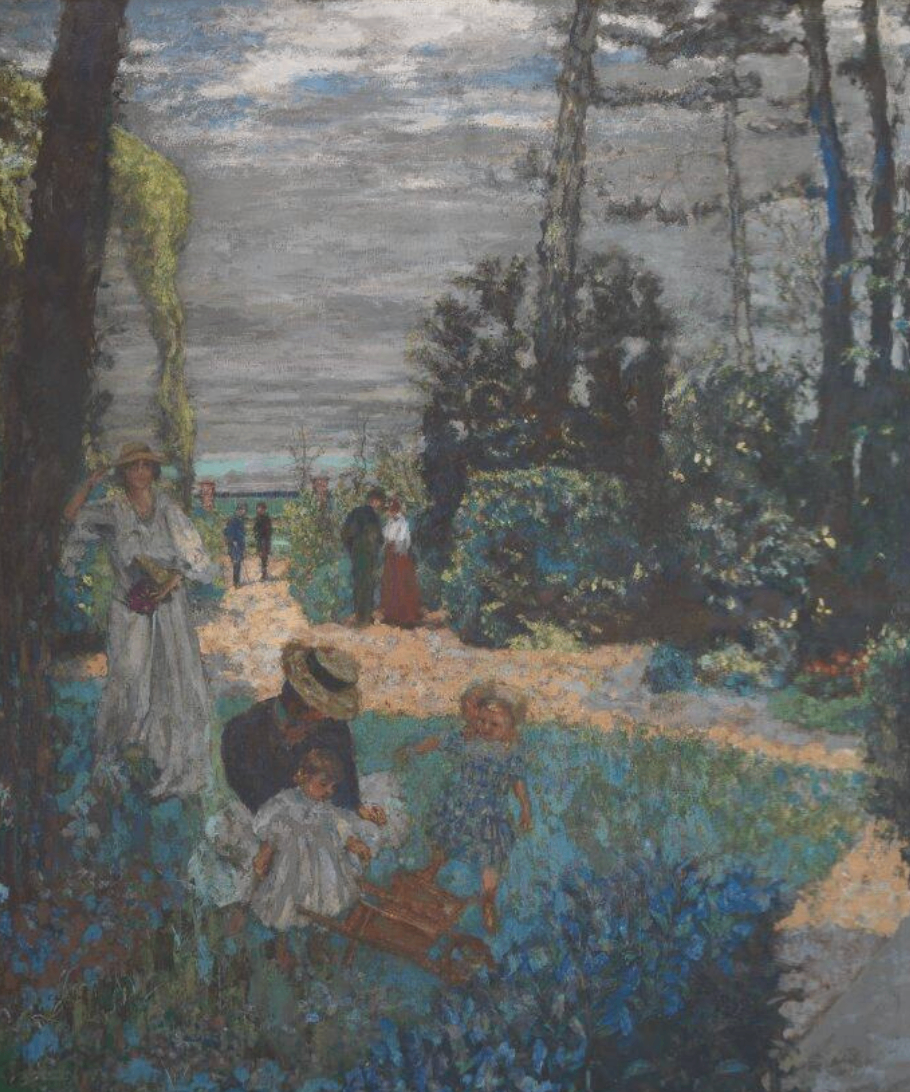
The scene captures a quiet moment beneath blossoming apple trees, where two women and several children gather in dappled sunlight. A flowering tree anchors the composition, its branches filled with pale pink and white blossom forming a loose canopy above the figures. Light filters through the foliage, breaking across the grass and clothing below. Lacroix uses lively, fragmented brushwork that leaves the texture of the paint clearly visible, recalling Édouard Vuillard’s La Terrasse at Vasouy, The Garden (National Gallery, London) (Fig. 1). Both artists favour a loose, immediate handling of paint over a highly finished surface. Yet Lacroix’s palette is noticeably brighter. While Vuillard works largely with muted greens and earthy tones, Lacroix introduces turquoise, acidic yellows, and more saturated colour throughout the composition. This heightened palette suggests an awareness of Neo-Impressionist experiments with colour and optical luminosity.
Louise Renée Lacroix (1890–1940) was a French painter whose biography remains sparsely documented, representative of the many women artists active during the interwar period who faced significant barriers to formal training and professional recognition. While no record of academic instruction has been identified, her surviving works demonstrate considerable sensitivity and technical competence, suggesting either private tuition or autodidactic development. Lacroix is believed to have participated in regional exhibitions, though comprehensive documentation of her exhibition history remains elusive. Her work exemplifies the challenges of recovering the contributions of female artists from this era, many of whom operated outside established institutional frameworks.



 CN
CN